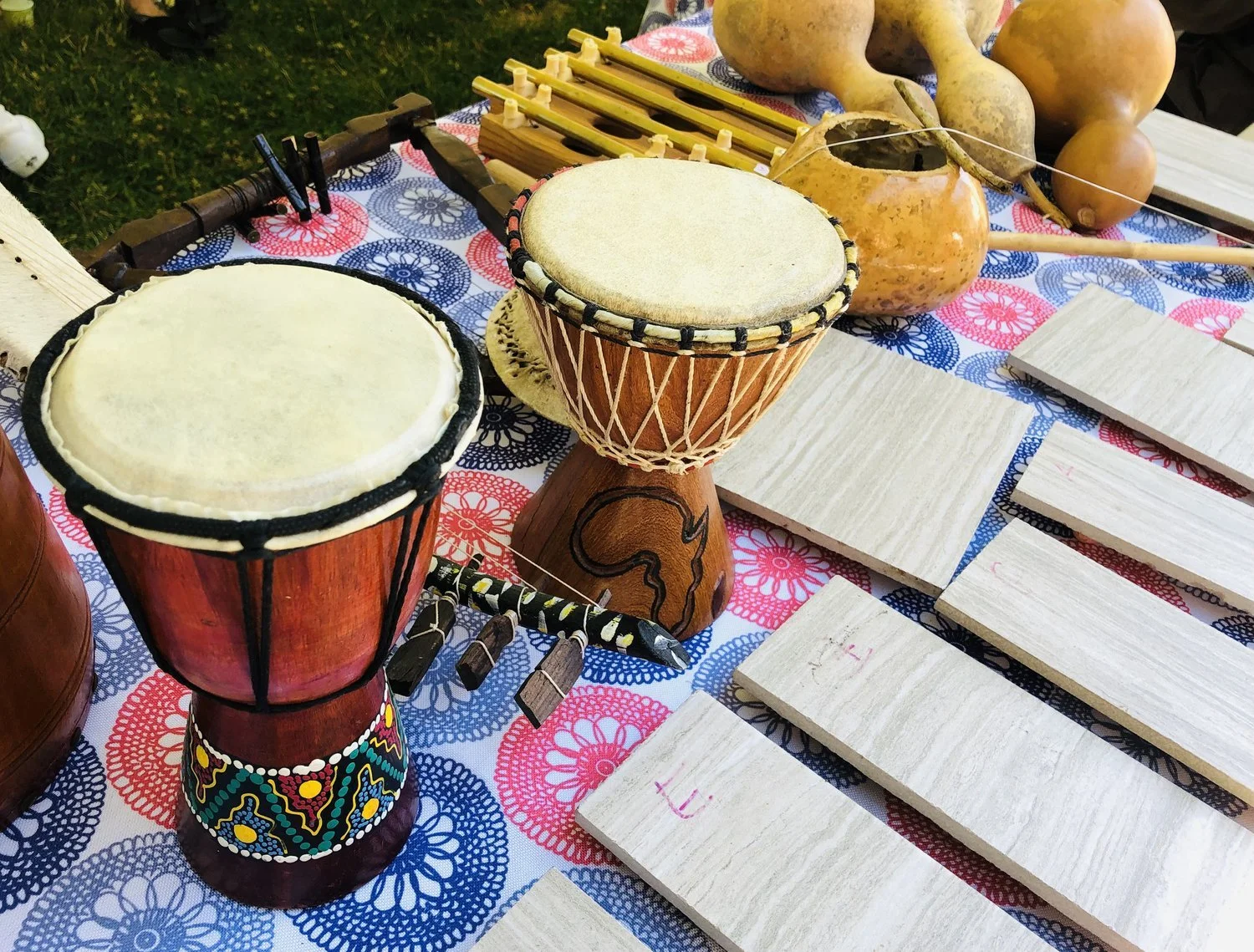
May is International Drum Month - What Is a Drum Circle
Laura Cerrano
The Month of May is International Drum Month. You are invited to embrace the rhythmic, playful side of yourself through the power of drumming! In this article, you learn about the history of drum circles, types of drum circles, benefits, and FAQ’s.
What is a Drum Circle? - Exploring the history and how drum circles have evolved..bringing us to New Orleans, Louisiana
Before the Europeans arrived in New Orleans, 40 distinct indigenous groups were already living in the region. Tribes included the Chitimacha, Houma, Chawasha, Washa, Acolapissa, Tunica-Biloxi, Bayogoula, Natchez, Atakapa-Ishak, and other groups. The original name of New Orleans and its surrounding areas (including Congo Square) was Bulbancha, also spelled as Bvlbancha, which translates to “the place of many languages”. In particular, the area we know today as Congo Square was where tribes gathered in ceremony, played music, traded goods, and became a place that maintained deep cultural ties to their traditions and ancestors. Tribes faced devastating disease, warfare, enslavement, and displacement following French colonization in the early 1700s.
Staying in New Orleans, we turn our attention to Congo Square. Just as before with the indigenous people, enslaved people, mainly from Africa and the Caribbean, gathered to play music, dance, and trade. However, enslaved people could not do so of their own free will; the French and Spanish colonizers granted permission only on Sundays, but that also came with heavy restrictions. One of the first distinct rhythms and dances of New Orlenes was the Bamboula, which is a traditional drum, rhythm, and dance form from West Africa. Over the years, this rhythm has influenced and inspired the evolution of modern jazz, funk, blues, and dance. Today, drummers and dancers continue to gather in Congo Square, serving as a space to preserve heritage and musical legacy and to educate visitors and locals about the true history that unfolded there.
Bringing us up to speed a bit more, the word “drum circle” emerged as an American counterculture creation during the 1960s and 1970s in places like San Francisco. The word “drum circle’ is associated with the act of improvised music-making through informal groups that gather in public to play. However, “gathering in circles” has been happening around the world since humans evolved in Africa, Asia, the Middle East, the Americas, Europe, Australia, and the Oceanic regions.
The earliest known manufactured drums, featuring animal skins stretched over empty frames, originated in Neolithic China. Before that, humans used rocks, hollowed logs, and body percussion as some of the oldest forms of communication. Regarding the modern-day drum circle, West Africa is a major influence on today’s drum circle communities. The countries of Mali, Guinea, and Senegal developed highly sophisticated drumming traditions used for celebrations (e.g., weddings, harvests), communication between villages, storytelling, and the preservation of history. Gatherings of the past and today often involve drummers, dancers, and community members, making them direct ancestors of modern drum circles.
After the 1960s and 70s, drum circle popularity faded, and it was known to those who kept it going within certain communities between the 1980s and the early 2000s. The term “facilitated” drum circle is credited to Arthur Hull, who pioneered the foundations of modern-day drum circles in the 1980s. The impact of COVID-19 in 2020 sparked renewed interest in drum circles because this activity allowed people to stay connected while following the CDC social distancing guidelines. Drum circles allowed those who participated (whether they knew how to drum or not) to foster social and emotional connections. Since the spring of 2022, as the world reemerged from the COVID pandemic, an explosion of interest and newfound respect for drum circles has blossomed.
The first modern clinical studies on the benefits of group drumming began around the early to mid-1990s. However, it was not until after the pandemic that ‘drum circles’ were recognized as contributing to the importance of human health. The National Library of Medicine recognizes drum circles as a form of music therapy. Research indicates that drumming in a community setting promotes emotional release, stress reduction, and social bonding. Mind you, indigenous cultures from around the world already knew and know this.
Are There Different Types of Drum Circles?
Yes! When people hear the term ‘drum circle,’ it becomes a catch-all term. However, it’s important to understand that there are different types of “drum circles”.
Free-form Community drum circles
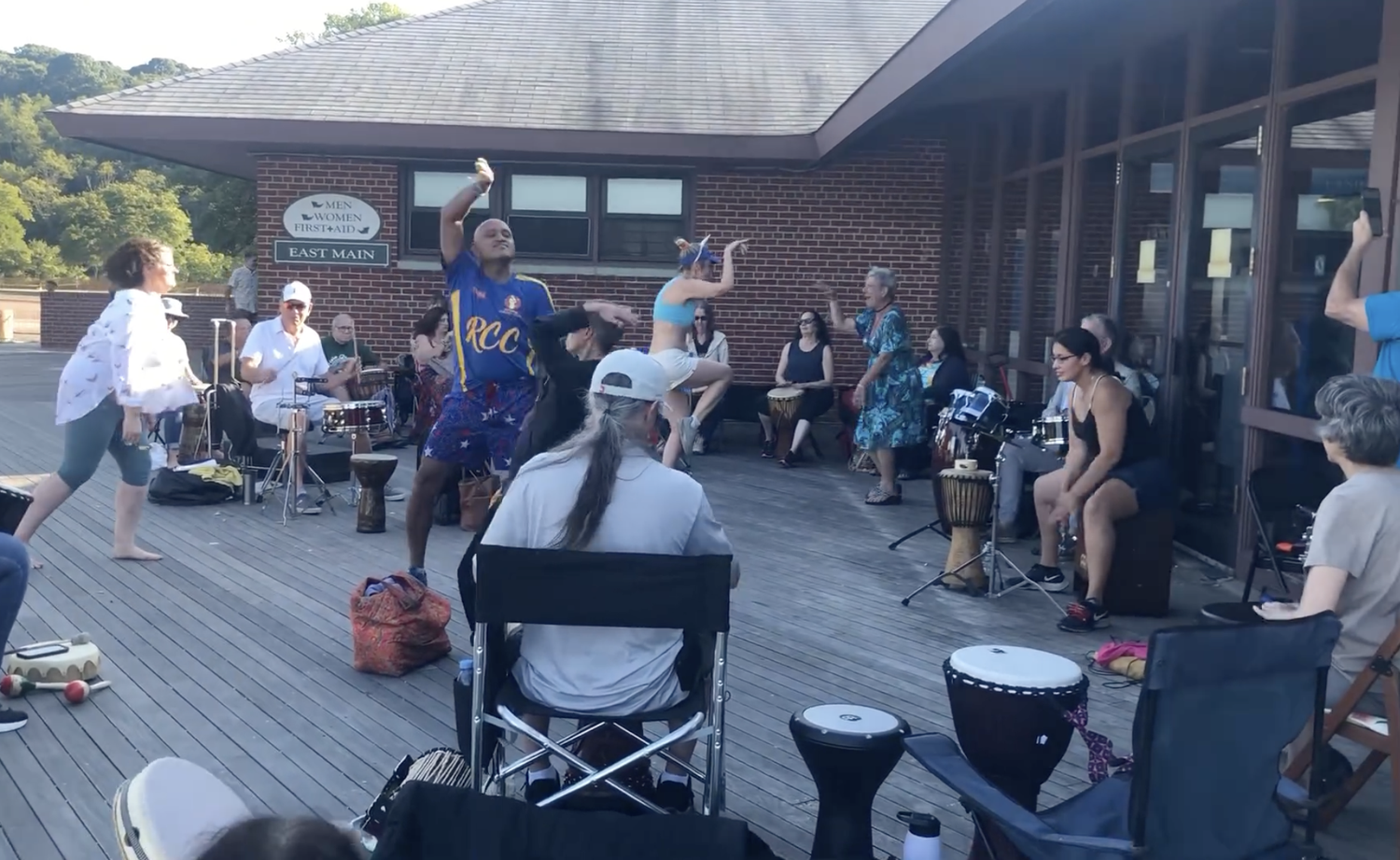
Photo of the Sunken Meadows Drum and Dance Circle, Long Island, NY
This type of gathering offers an open-format drumming experience. This means all abilities, all ages, and skill levels are welcome! People can join the drum circle at any time through dance, drumming, by adding another percussion instrument, or by simply observing.
If you arrive at this type of drum circle without a drum, you could ask someone within the group if they have an extra drum or if you could try theirs. Most circles like these could have spare drums or smaller percussion instruments to share. However, if you plan to make this part of your lifestyle, it's best to invest in your own drum.
Drum circles such as these often already have a few seasoned drummers to support the group’s overall sound. In these scenarios, there is no formal facilitation, and the focus is more on jamming.
Culturally specific drum circle
This is when the drum patterns, rhythms, dance, and songs are very specific to a particular culture. Drummers learn how to hold and play the drum, play the smaller percussion instruments, learn the songs, and understand that each drummer or group of drummers has their assigned drum pattern to play.
The video above is of elementary school students from Tri-CYA performing “Funga Alifia,” a West African song, at Walt Whitman High School in honor of Black History Month. Co-facilitated by Laura Cerrano of Healing Drum Circles.
Facilitated improvisational Drum Circles
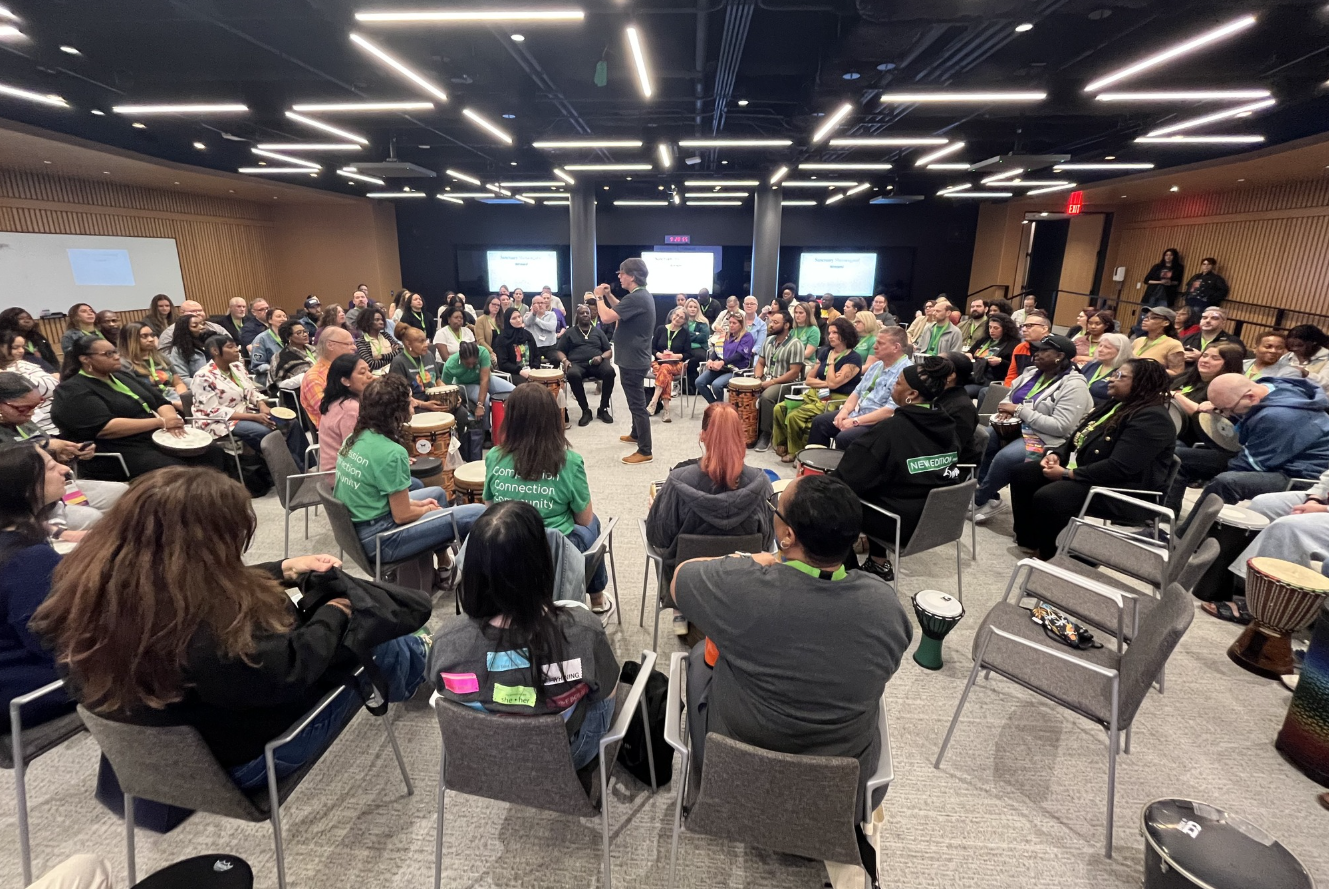
Facilitated combo Drum Circle for The Sanctuary Social Worker Retreat, 2026, Armonk, NY - IBM Center of Learning. Photo taken by Laura Cerrano.
These types of drum circles are for all occasions and populations. The Drum Circle Facilitator is not aiming for perfection; rather, they provide prompts as needed to support the group in co-creating a musical experience that leaves the autonomic nervous system feeling peaceful and reinvigorated. In other words, to have a musical conversation vs showing up and “banging on a drum,” which most tend to think that’s what a drum circle is when first participating.
There is a methodology to drumming in drum circles, from the start to the middle, and concluding a session. Drummers are provided with base instructions on how to hold and play the drum, and are prompted with simple cues that encourage greater listening for drum and percussion volume control, pulse, accented rhythms, rhythmic space, and deep listening through conscious playing. Smaller percussive instruments are also introduced into the group, which provides additional layers of musical texture and contrast. Overall, this provides the group with greater confidence and license to create their own collective sound, which is very empowering and fun!
For drum circles such as these, the facilitator will provide all the drums and smaller percussion instruments, unless otherwise stated and discussed. These drum circles will also be customized for each population and occasion.
improvisational Music-Making Circles
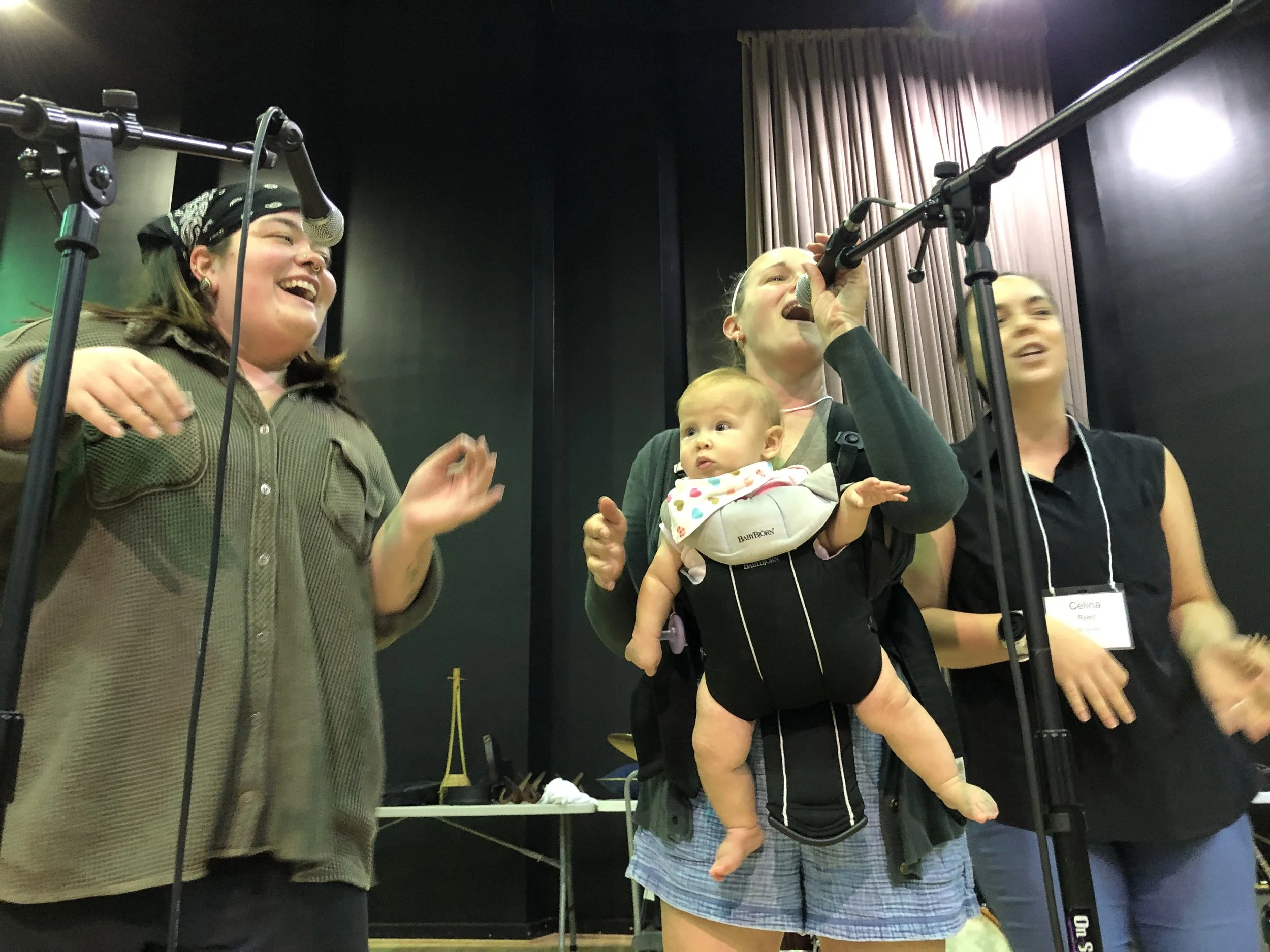
Improv music circle, Long Island, New York with Laura Cerrano
For those of us who are familiar with improv music circles, the name Bobby McFerrin and "circlesongs" may come to mind. Bobby McFerrin is known for the innovation of circlesongs that focus on collaborative, spontaneous vocal gatherings where participants create music in real-time.
Music-improv circles expand that world by inspiring real-time music-making through the fusion of various musical instruments. These types of circles bring in musical melody, mood, tempo, and simple music theory through collective improvisational experiences that may include pianos, violins, drums, cellos, guitars, boom wackers, handpans, vocal expression, and anything else that will lend itself to an enriched layer of musical possibilities. These types of circles often require a trained improvisational music facilitator, as there are tools, techniques, and structures to help make this method of music-making accessible to everyone, no matter their ability, age, or skill level. These types of improv music circles inspire deep levels of connection, presence, creativity, healing, community, and fun!
For music improv circles such as these, the facilitator will most likely provide the musical equipment, unless otherwise stated and discussed.
drum circle performances
This is when a select group of drummers is invited to perform a culturally specific drum piece or an improvisational drum performance. This type of drum circle event may not allow others to join immediately or at all, depending on the type of event. It’s always a good idea to double-check with the program organizers to see if observers will be invited to eventually participate.
Benefits of drumming & music-making circles
Relieves stress
Builds connection
Improves circulation
Inspires collective joy and playfulness
Improves mental health
Strengthens motor control
Helps to regulate the nervous system
Brain benefits - strengthens the corpus callosum, which improves problem-solving, creativity, and cognitive flexibility.
Depending on the type of drumming, brainwaves can shift from Beta (active, concentrated states) to Alpha (calm, relaxed states)
Improves Neuroplasticity
There are so many great benefits!!
Frequently Asked Questions about Drum Circles
Do I need to know how to play?
Answer: No. All ages, abilities, and experience levels are welcome.
However, it is still advised to practice and even consider attending drum classes if you foresee yourself embracing the drum circle community. The benefits of this will allow you to learn specific drum patterns and become comfortable with musical improvisation while playing with more intention. All of this leads to stronger abilities and skill levels that enable you to participate in drum circles with even more confidence and make a great contribution to the group! Most will begin with West African drum classes; however, the drum classes you join will also depend on where you live and your cultural preference in the style of drumming.
———————————
Who can join a Drum Circle?
Answer: everyone! However, if the event is culturally specific, population specific, or occasion is specific, that will usually be pre-indicated; i.e., toddler drum circle, Parkinson’s support group drum circle, Community Drum Circle (which usually indicates all are welcome), etc.
Toddlers/Babies
Children
Teenagers
Adults
Special Needs and Disabilities
Dementia Support Groups
Alzheimer's Support Groups
Parkinson’s Support Groups
Care-giver Support Groups
Women's Empowerment Groups
Veterans Support Groups
Hospitals and Healthcare Workers (i.e, doctors/surgeons)
School Teachers/Guidance Counselors
Public/Private Schools/Colleges/Universities
Psychologists
Conferences
Networking/Icebreaker Events/Team Building
Social Workers
Hospice and Bereavement Camps
Summer Camps
School Enrichment and Cultural Arts programs
Library Programs
HR Corporate Team-building events
Birthday Parties
Holiday Celebrations
Wellness Retreats
Cancer Retreats
Stroke Survivor Support Groups
Reiki Circles
Grand Openings
Religious Events (i.e., bridal showers, weddings, celebration of life ceremonies) and the list goes on!
———————————
Do you have to pay a fee to join a drum circle? I thought they were always free?
Answer: Most community drum circles are free; however, some drum circle events may ask for a donation or charge a fee, depending on when, where, and the type of occasion.
Remember, when you see a fee for a drum circle, this usually means it’s a facilitated drum circle event that requires the facilitator to provide all the drum circle equipment, setup/breakdown time, travel time, and facilitation time. If it’s a large event, the facilitator may need to hire additional help.
Please respect the efforts of your local drum circle organizers and facilitators. Yes, drum circles are fantastic and very fun!…while at the same time they are a labor of love; transporting numerous drums, loading/unloading the drums (which vary in weight, shape, and size), providing a safe space to co-create music and self-express :) Whether the drum circle is free, donation-based, or requires a fee, a lot of planning, effort, and care goes into every one.
———————————
It’s great to be aware of the various drum circles being offered and being open to trying different circles to see which one or which combination of them provides you with the musical medicine that suits you best. The culture of drum circles embraces connectivity, fun, self-expression, playfulness, and community. Again, drum circles can be fully customized to suit the occasion and population.
“We are aiming for connection, not perfection” ~ Laura Cerrano
Click to View: Upcoming Events with Laura Cerrano of Healing Drum Circles and Improv Music Circles
